Monday, April 30, 2007

The Film Parzania - Remnants of an Unforgotten Tragedy

Unilike the previous few weeks, we spent this weekend holed up inside our house. Ofcourse, we did our routine grocery shopping on saturday but that was it. It was just bouts of sleeping, eating, TV and enjoying the view from the balcony. There was some time to catch up on the movie Parzania.

The DVD was lying around for a while. Parzania is based on the 2002 Gujarat riots that shook the communal fabric of India. The movie is very bold in its depiction of the events that led up to the riots. Parzania explores the tragedy, pain, violence and the conspiracies behind the riots through the simple tale of a family caught in the storm.

Most directors would not have the nerve to portray the Gujarat state government in bad light but Parzania delves deep into the state administration. It highlights the flaws behind the approach of the Government in the aftermath of the riots. This movie critiques the Indian society and its misgivings through the eyes of an American who comes to learn about Gandhi. There is a subtle constrast here as the American comes to Gujarat, the birth place of Gandhi, to learn about the non-violent ideals of Gandhi. Instead, he witnesses one of the most gruesome tragedies of all time.

The plot revolves around a Parsi (origins in Persia) family who lived in a predominantly muslim neighbourhood in Gujarat. Nasserudin Shah plays a very loving father in Parzania. His content life is spoiled by the communal violence that takes his son away from the family. Saritha is a resilient mother coming to terms with the loss of a child in Parzania. The viewer can feel the agony of the family as they frantically search for their son after the riots. The callous attitude of police and the senseless acts of the state authorities are skillfully woven into the grief of one family.

I remember being in Ahmedabad shortly after the riots. There were some reminders of the violence like the charred hotel complex in the down-town area of Ahmedabad. I remember walking through one of the pre-dominantly Muslim pockets in the city with my Bengali friend in search of some shopping bargains. There was some demonstration going on in the city commemorating a Hindu festival that day.

I can distinctly remember the piercing look in the eyes of the people in that area. Their expressions revealed the horror they endured in the past few months. Perhaps it was a grimace of intense hate towards life after the tragedy. My hindu friend and I were slightly unnerved while being in that area. She was fumbling to remove the 'bhindi'on her forehead, a mark related to the hindu faith. We never ventured into those areas again and the image of the people there haunts me in a strange way.

Parzania captures the plight of a terror-stricken community through a simlple story. It is effortlessly told but leaves a lasting impression. The violence of Gujarat riots is recounted yet again through Parzania.

There are many lessons to be learnt from history. Understanding history is important because history should not be repeated. Movies like Parzania send out this message to the masses. The message that terrible events such as Gujarat riots should never occur in a country of many religions.

Wednesday, April 25, 2007

Discovering the Orient in Brussels

True to its cosmopolitan nature, Brussels is proving to be a treasure house of monuments linked to various cultures. Most of these structures are associated to the Belgian royalty to an extent. During one of our weekend strolls, we chanced upon an oriental connection in this city.

We set out on a bright sunday afternoon to visit the royal greenhouses in Brussels. We made our way to the nearest tram stop in search of the vast expanse of greenery in Laeken also know as the 'domaine royal'. Soon, we realized that there were many sites related to the royalty in this particular section of the city.

We first came in the vicinity of the Notre Dame Church, a structure built in grand, gothic style. This church was built in 1854 by King Leopold I in memory of Louise-Marie, the first queen of Belgium. The front portion of the church, unlike the other sections, looked bright due to the restoration work.

The many nameboards in the area pointing in many directions confused us. We came to the royal parc situated a little away from the church next. We kept walking since our final destination was the royal gardens.

After covering a considerable distance under the blazing sun, we saw the gates of the Laeken palace where the royal family currently resides. There were scores of people lined up in front of the gate. Many of these people merely walked upto the palace and returned. This convinced us that this was not the entry to the gardens.

We moved further ahead in an attempt to locate the entrance to the greenhouses. The gardens were located behind the high, metal walls bordering the side-walk. However, we could not find a viable entry point.

Just as this endless walk tired our minds, we came to an area that resembled the images of the Orient we have often seen in magazines. We had stumbled upon the 'Museums of the Far East' consisting of the Japanese and Chinese pavilions commissioned by King Leopold II in the early 1900s.

These exotic towers were designed by the French architect Alexander Marcel to commemorate the exchange of economic and cultural links between Europe and the Far East. Though built according to European principles, much of the opulent facades and decorations were brought from China and Japan.

Inside the pavilion, there are paintings, pottery, porcelein and delicate china on display. There was an atmosphere of elegance inside the buildings. Light filtered in through the coloured, glass windows. Warriors, kings, dragons and mythical characters sprang to life from the paintings and artifacts hung on the walls. The dark and solemn appearance of the Japanese towers present an aura of mystery as though origniating from the ancient culture of the Orient.


Although highly ornate, the Chinese pavilion offers a brighter view. The marble stones and golden metallic carvings add lustre to the the finely furnished interiors. Many items pertaining to the Far East are on display here including metalwork, engravings, paintings, ceramics and sculpture.


This exhibition is an absolute treat to see. It is an indepth look at the culture and traditions of a culture rooted in folklore. These towers are an amazing contrast to the glass buildings so typical of present-day architecture.

Although we missed the royal gardens, our original destination, we were not very disappointed. Instead, we were delighted to discover this path to the Orient in Brussels. I am sure that there are so many more such intriguing sights in this city. I hope that we will keep unravelling the many attractions of Belgium. .

Friday, April 20, 2007

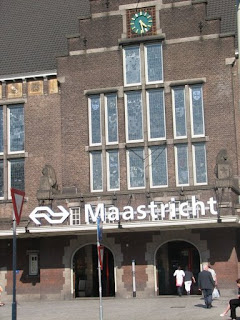
Through Mine Eyes - Destination Maastricht

Extended Memories - Destination Maastricht

The skies welcomed our decision to tour the historic city of Maastricht with blazing sun-shine and unusually warm temperatures. Maastricht, a city situated on both sides of the River Maas (River Meuse in French) in the south-eastern part of Netherlands, is arguably the oldest in the country. The city overwhelms visitors with its archeological remains, ancient city walls, centuries-old basilicas and labyrinthine caves all entwined along the banks of River Maas. Anyone visiting Maastrict will get a sense of the rise and fall of the many civilizations that thrived here ranging from the Celts and the Romans upto the current population.

The beauty of Mastricht lies in the existence of aging monuments in the midst of a modern and cosmopolitan metropolis. It is hard to imagine an Aston Martin parked alongside the historic city wall but that is the bewildering contrast that this city offers. The buildings look antique as though they date from a different era. Peer through one of the grand windows and that thought will instantly fade away. These buildings are fitted with all the modern amenities preserving the classic architecture but without missing any of the comforts.

One of our first stops in Maastricht was the 'Apostelhoeve' vineyard nestled in the scenic valley of the Jeker on the south side of the city of Maastricht. The large tourist bus we were travelling in somehow managed to get past the narrow, winding roads leading upto the vineyard. The entire area is full of Cherry blossoms making this location a photographer's paradise. During the guided tour inside the vineyard, we were shown the places where the vines are cultivated, the area where the delicate manufacturing process of wine takes place and the cellar where the wine is kept until maturity. There was a wine-tasting session afterwards during which all the visitors got to taste at least three different wines made in 'Apostelhoeve'.

We came back to the banks of River Maas for a boat trip leading to the famed St. Pietersberg caves. The churches, charming villas, sprawling landscape, appartments and other city structures on either side of the river are a sight to see. The warm sunshine and the cold breeze evoked a mixture of emotions in us while we were aboard the boat.

The St. Pietersberg caves are the result of prolonged excavation in search of a building stone called Marl. The mining left a network of more than 20,000 passages. The terrifying darkness and chill atmosphere inside the caves speak volumes of the lives of the miners who worked in these caves. The caves were also a source of refuge for the city inhabitants during times of war. The guide, holding an old-fashioned lantern, outlined the history of the caves and the meaning of some of the inscriptions on the walls. Some of the inscriptions marked the ownership of certain portions of the caves, others were charcoal-engravings displaying religious & patriotic emotions and still others were advertisements meant for the local population. The stone-hewers who worked long hours in these mines also scribbled on these walls in an attempt to preserve their memory.

We were back on the boat after this hour long tour of the caves. The captain explained a little about the city while we cruised down the river. We entered Belgian waters for some time but then reversed to the centre of Maastricht. We were back in the Crown Plaza hotel situated adjacent to the river after a tiring day in this border city nestled between Netherlands, Belgium and Germany.

We were on a mission to discover the heritage of Maastrict the next day. A walk through the old city centre is the best means to discover the historic structures, churches, cobbled streets, decorative buildings and the city wall. The boutiques and eateries along the narrow streets swarmed with people out for a leisurely stroll. In the midst the old city, there is a park offering a splendid view of the city wall as well as some respite from the crowds.

Onze Lieve Vrouwebasiliek (Basilica of the Virgin Mary) is one of structures dominating the old city centre. This millstone structure dates from before 1000 AD and is among the oldest churches of Maastrict. The entrance to the impressive basilica is through a dimly-lit prayer hall. The chapel is lighted with candles lit by the faithful who throng the basilica in search of the blessings of Virgin Mary. The interiors of the church are richly decorated with tapestries, stained-glass, silver figurines and sculptures depicting biblical characters.
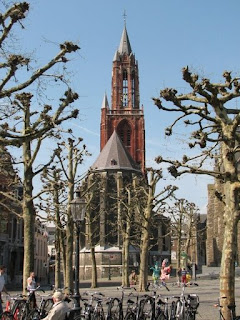
We moved on to the market square or the main Vrijthof Square in Maastricht. Besides the bustling commercial activity, the main attractions here are the Guard house, St. Johns Cathedral and the St. Servatius Basilica.

St. John's Church, built in the 13th century, has two towering, gothic spires overlooking the city. There is a distinct pulpit and some paintings dating from the 1400s. The tower can be reached through a narrow, spiral staircase consisting of 218 stairs. The steep climb up is tiring but there is a breath-taking view of the city from the top of the spires.

After a dizzying descent through the stairs, we decided to tour the Treasury Basilica of St. Servatius. I was taken aback by the sheer magnitude of the basilica. This imposing structure is a treasure trove of culture, history, tradition, architecture and religion. The basilica encompasses all the charms of the city and pours forth a saga of the greatness of its inhabitants. The remains of the first Bishop of the low contries, St. Servatius, is interred in a crypt below the basilica. This shrine, called the Chest of Emergency, houses the skeleton of the Bishop. Other treasures inside St. Servatius Basilica include the cup of St. Servatius, the bust reliquary, the pectoral cross, the key, the crosier and the items made in precious metal or ivory all dating from the 10th to the 15th century.

I felt a deep sense of history and tradition after viewing the relics. I kept thinking of how difficult it must have been to build such a gigantic structure and decorate it so richly. The ceilings had intricate chandeliers, elaborate paintings and complex sculptures. The arches were collossal and fashioned in the early baroque style. Even the flooring was unique with patterned tiles and carvings. This basilica is monumental and I consider visiting this structure to be the experience of a life-time.

We made some time for shopping in the Maastricht streets adjoining the city square. There are a large number of boutiques and department stores in the city-centre region. The shops cater to a variety of tastes and interests. There are small restaurants serving customers local delicacies, antique shops revealing instant bargains, garment outlets marketing aggressively and haute-couture boutiques with fashion accessories on display.

I left Maastrict feeling mesmerized at this combination of a glorious past and the ultra-modern present. The old co-exists with the new in Maastricht or in other words, the past is cherished and preserved in this city. It is exactly this blend that draws tourists to this region. A few days in Maastrict left me awed at the genius of its former citizens and the nurturing approach of the present authorities. To the visitors, it seems as though the city is touching modernity while firmly holding on to its past. I am sure that Maastricht will satisfy those who are on the look out for adventure, nature, history, religion as well as some enticing city-life.

Wednesday, April 11, 2007

Extended Memories - Along the Belgian Coast

A promenade on the seaside is the most popular way to spend the holidays. For those who are wondering whether Belgium has a beach, the answer is a resounding yes. Oostende, the northern end of this small country faces the North Sea. This resort city on the Belgian coast is the famed summer residence of the Belgian royal family. Oostende is mired in history just like many other locations in Belgium.

My husband and I teamed up with another family to catch some of the seaside attractions in Belgium. We woke up early on Easter monday to catch the morning train to Oostende. We had already noted down the main attractions in Oostende the previous night and set out to conquer this list of places.

The Brussels Central Railway Station was more crowded than usual. I figured that most of the people were hopping to tourist destinations on account of the public holiday. We got into the crammed mid-section of the train but couldn't find any seating space. We walked all the way to the last train cabin in search of vacant space. We found a quiet corner to sit through the one and half hour train journey.
Oostende station is extraordinary in the sense that this is a combination of a harbor and a rail station. From the platform, we can see ferrys and ships anchored in the harbor waiting for passengers. It is possible to ferry across the North Sea to Dover in England from this harbor in Belgium.

The twin towers of the St. Peter and St. Paul church captures the visitor's attention from outside the station. The church is located a stone's throw away from the station. This gothic structure is built entirely in sandstone and dates from 1904. The church houses the mausoleum of Louise-Marie, the first queen of Belgium. Peperbusse, a smaller tower next to the church, is the remaining portion of the original church dating from the 18th century.

There was an Easter Eucharist service going on in the church when we arrived. We could hear the church choir playing hymnals. A musical band along with people dressed in colourful, traditional attire were waiting outside the church for the Easter procession.

The view inside the church was spectacular with beautiful stained glass windows depicting the Belgian royalty. I was taken amazed to see that the offering for the Eucharist consisted of bread and fish. Oostende was and still is a fishing town. Perhaps this is the explanation for fish being offered at the altar. This church was brighter in appearance compared to the black, stony appearance of the churches I visited before.

We decided to return to the harbor to see the Mercator ship. This is a ship that the Belgian Navy used for training and instruction until 1960. The ship is now a floating museum offering visitors a glimpse of life at sea. There is a collection of articles on display pertaining to Belgian maritime history. The quarters of the naval lieutenants, officers, commandments and captain are preserved for posterity.

Mercator was also part of many scientific expeditions and these trips are chronicled in the tabloids mounted on the hallways. The mortal remains of the Belgian priest, Father Damien was brought back to Belgium from Molokkai islands in this ship. I remembered reading about Father Damien during my school days when I saw the photographs and inscriptions indicating the transport of his remains. This priest dedicated his life to the betterment of leperosy patients in the Hawaian islands of Molokkai before finally succumbing to the disease himself. I am glad that this service to humanity was recognized by the Belgian government and that his country offered this great man his final resting place.

After touring the Mercator, we went to the tourist office and took combination tram & museum passes to Raversidje or the beach side of Oostende. The view of the coast as the tram moves along the coast is magnificient. There were many beaches, hotels, taverns and shops catering to the tourists relaxing in the sun. After getting down at Raverside, we decided to visit the monuments in the area before returning to the beach.

One of the shop owners in the area told us that the museums and nature reserve would be only a ten minute walk. We started walking towards the path she showed but it was a very lengthy route. After about forty-five minutes of walk through a winding pathway, we reached a beautifully maintained exhibition area. We got tour guide phones from the main hall to guide us through the exhibits.

The complex set of tunnels and bunkers called the Atlantic wall used by the German forces was truly a sight to see. This seaside area was used during both the world wars to house the German forces, to monitor the enemy and to launch attacks. The remnants of the world wars, including the sea mines, torpedos and bofors weapons are still intact. I was impresed by the clever outlay of the underground bunkers and tunnels providing a maze of pathways for movement and attacks. There were outlets and equipements for keeping a watch on the enemy from below the ground level. I am still dazed by the ingenius design of the bunkers by Germans.

The summer residence of Prince Karel of Belgium is preserved in all its beauty in an adjoining area. This villa contains many of the prince's personal memorabilia including many of his artistic works. We were able to listen to the descriptions of the items on display by keying in the exhibit numbers on the phone we were provided with. The exhibition was especially interesting since we could understand the significance of the items on display. This walk through the Atlantic wall and the museums took us about three hours but it was truly a walk through history.

We walked back through the same narrow pathway to the beach and stopped to inform the lady we met in the shop before that it was more than a mere ten minute walk. She was amused and chuckled sportingly. We stopped over at the beach for a couple of hours afterwards. The chill waters and the gentle breeze was refreshing after the long walk.

We were all hungry by the time we reached back to the railway station. We grabbed a quick meal of burger and fries before heading to the platforms to take the train to Brussels. All of us dozed off on the train after the tiring and eventful day. I know that we covered a lot of ground on Easter monday, 2007. The towering St. Peter's church, a floating museum, sandy beaches, underground structures and the imposing harbor are my memories of the day spent in Oostende. I know that these images will be imprinted in my memory forever because it was a walk through years of history.
"

Extended Memories - Charming Dinant

What can be better than a long weekend, warm weather and sunny skies for visiting some of the most charming locations in Belgium? Ofcourse, nothing more was needed for two restless souls searching for the perfect sites to visit in this miniscule country in the heart of the European continent. Plan, plan and plan ahead was the buzzword for filling up the Easter weekend. I decided to scour the web for interesting places to visit in Belgium.

Belgium is immersed in history and littered with battle grounds ranging from Napolean's Waterloo to the World Wars. This is a 'must-see' country for history buffs with many heritage sites worth visiting. The monuments and remnants in Belgium entice visitors with its saga of constructions, conquests and subsequent rebuildings.

My husband and I decided to visit some of the historically significant cities in Belgium for some serious soul-searching. Little did we realize then that the stories we had learned through text books would come alive for us in these few days. We decided to visit a small town called Dinant, 65 km south of Brussels, on the banks of the River Muese on saturday. We charted our iteniary well in advance so as to maximize our time spent in Dinant.

We caught the early morning train to Dinant from Brussels. The somber Brussels landscape quickly faded into calm, scenic country-side. After winding its way through valleys, mountains and canals, the train pulled into the small railway station in Dinant. One look at the town from the railway station assured us that the place was indeed tiny.

The Citadel and the Notre Dame Cathedral are two prominent landmarks in Dinant located close to the railway station. These two monuments are located so close to each other that they look like one on top of another. The Cathedral has an onion-shaped dome that is often considered the symbol of the Dinant skyline. The structure dates from the 12th century but was oft destroyed by invaders. Inside the church, there are many religious objects including decorated candle-stands, ornate altars and iconoclastic paintings.

The Citadel is perched on top of a rocky cliff and overlooks the Cathedral. There is a steep train of 420 steps to climb to reach the fortress for those who are adventurous. For lazier creatures like us, there is a sky cable car ferrying passengers back and forth. The Citadel was mainly used to protect the city and as a storehouse for armaments. It houses war memorabilia from from the medieval times upto the world wars.

We saw a museum of armaments, dioramas depicting life during medieval times and a collapsed bunker from World War II. This bunker was damaged during the bombing and is preserved in its original form. It is hard to pass through the bunker without feeling dizzy due to the gravitational pull. After touring the Citadel, we decided to climb down the steep, narrow stairway. There are over 400 steps to this descend and is certainly not recommended for the faint-hearted.

After a quick lunch, we started exploring the town again. This time, the cruise boats taking tourists for an hour long tour on River Muese caught our imagination. We were soon inside the boat wandering along the Muese River. We saw architechurally important buildings and a grand casino supposed to be one of the oldest in Belgium. The recently renovated Casino on the river bank looked splendid from the cruise boat.

It was soon time for us to catch our train back to Brussels. We left this charming town with fond memories of a day well-spent. A magnificient fortress, a gigantic church and a scenic river are the ingredients to the success of this incredible tourist town. This is one many get-away locations in Belgium far from the bustling Brussels city-life. Dinant offers visitors pristine country-side, abundant waters and spectacular monuments. Moreover, the town has centuries worth of stories to showcase to the world.

Monday, April 2, 2007

10 Short Cuts to Happiness!


People often find it difficult to reach contentment even when they are richly blessed. There are reports of celebrities committing suicide or falling into long years of drug abuse despite their riches. This proves that unlike the popular perception, money has very little to do with satisfaction.

So is there a short cut to happiness? Here are some tips that I follow to keep moving towards the happier end of the road.


1. Never compare with others.

This is a golden rule. Remember that your brain tricks you into believing that ‘the grass is always green on the other side’. If you compare, you will always end up feeling short. Then there is a mad scramble to catch up and try to beat someone else. You are never going to catch up just because this feeling is just a figment of your imagination. Be inspired through the lives of people who have conquered odds but always remember that you can only be yourself.

2. Count your blessings.

I used to be overly concerned about what I did not have. Before long, I realized that this was eating away my pie of happiness. I also found out that I have so many obvious blessings that I took for granted just because I focused more on what my friends or cousins have. Instead, I now concentrate on my blessings especially my family, friends and my circumstances. This is a sure way to happiness as it alleviates a whole lot of misery.

3. There is joy in giving.

I have noticed that I feel most happy whenever I am able to give. Of course there is joy in receiving but there is much more of it while giving. A thoughtful gift or a word to someone in need is a sure step to happiness.

4. Help those who are in need.

There is a huge mental satisfaction when you are involved in helping others. There is something alluring in being of assistance to others. I found a lot of pleasure in helping others with studies during my college days. Many of my juniors in college came to me for advice. I was so happy to realize that I was a source of inspiration for them.

5. Prioritize

I have seen many people obsessed with their careers. Most of them find very little time for family and friends. I feel sorry for them since I am sure that they will come to a point of regret sometime at the end of their productive lives. This points to one of the most important rules of life - prioritize. If you make sure that you have time for others, others will surely find you in your hour of need.

The busy executive will never realize that his wife is continuously building up negative thoughts in her mind. The overly busy mother will never realize that there is less of her in her child’s life. It is a vicious circle. So, make time for your friends and family before time runs out.

6. Think before you act.

Most unpleasant actions can be avoided by triggering the thought process. There was a time when I was quick to react. I would blow my fuse every time someone disagreed with me. It took me some time and a lot of interaction with different types of people to realize that slow to anger is a sure key to success.

7. Experience positive vibes.

The first thing that comes to my mind when I think of a possible course of action is all that could go wrong after implementing it. I would have a short bout of imagination where all these wrong effects haunted me as demons. Fortunately, I have now realized that much of it is due to negative feelings. I now try to fill myself with positive images that reinforce a positive outcome. Needless to say, that works well.

8. Manage your desires.

Ambitions are a part of life but desires have a tiny role. Desires magnify emotions and point to inadequacies. I would consider having a meaningful career as an ambition but trying to outsmart others for that undeserved promotion is more of pursuing a desire. Manage those desires before they manage your life!

9. Don’t aim for revenge.

I used to keep a count of the wrongs that others did to me. This was before I came to know the power of ‘letting go’. Otherwise, the counts keep increasing as well as negative needs for revenge. I don’t aim for revenge anymore or keep a track of those who have wronged me. This is a sure step towards happiness.

10. Be yourself!

There is magic in believing that you are unique. I know that I am a person with a difference with distinct abilities and needs. I carry this positive reassurance throughout my journey of life. This realization will pave your path to success.